
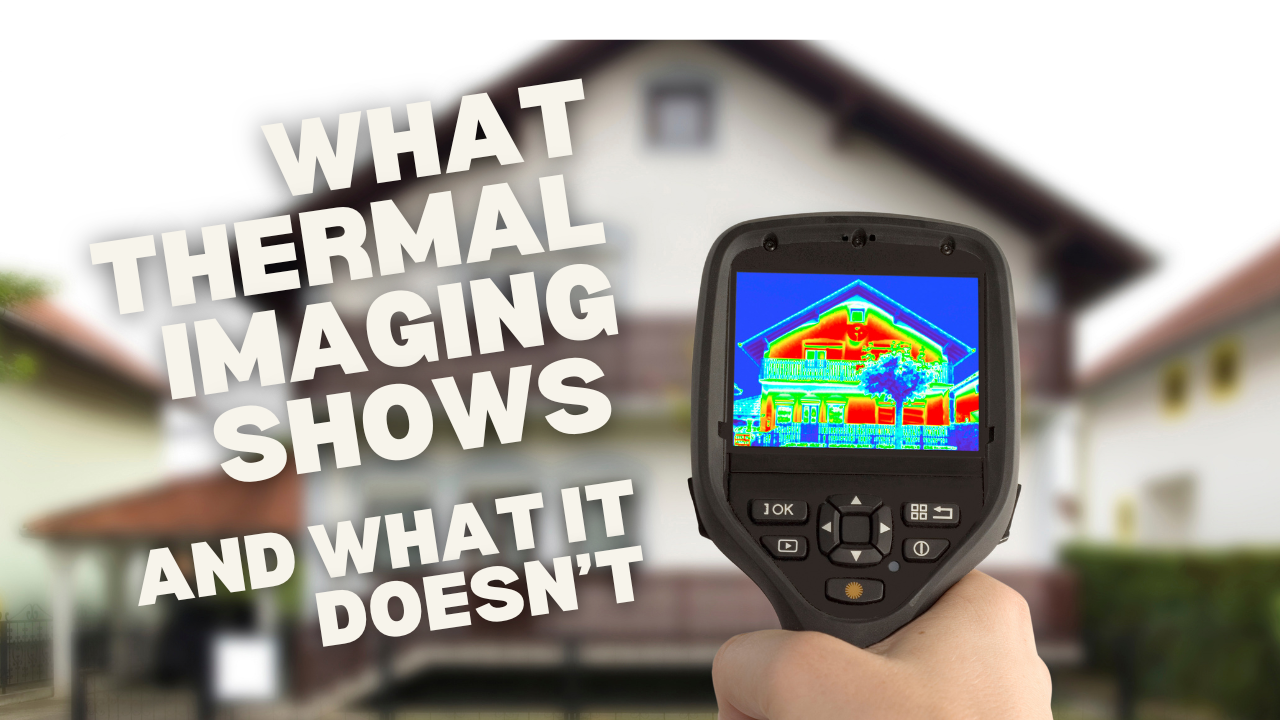
Recently, I attended a lunch & learn with Pristine Inspections, where inspector John Cheney shared a detailed look at how thermal imaging (infrared) is used during home inspections.
As thermal imaging becomes more common in home inspections, it’s important to understand what it actually does—and how to interpret the results.
Quick Summary
Thermal imaging is a science-based tool used during home inspections to detect temperature differences on surfaces, helping identify potential issues like moisture, insulation gaps, and air leaks. While it doesn’t diagnose problems on its own, it provides valuable insight when used and interpreted correctly by an experienced inspector.
A Quick Note on Experience
John Cheney has been a home inspector since 2003 and has been using infrared technology since 2009. Today, he incorporates it into every inspection and also teaches other inspectors across the country how to properly use thermal imaging.
That’s important—because like any tool, its value depends heavily on the experience of the person using it.
Infrared Isn’t New—It’s Just More Accessible Now
One of the most interesting takeaways was that infrared technology has actually been around for a long time. However, it used to be extremely expensive—early cameras could cost upwards of $25,000. Only in recent years has it become more affordable for home inspectors.
Which means:
- You’ll likely start seeing it used more often
- Not all inspectors use it
- And not all inspectors use it the same way
What Thermal Imaging Actually Does
Thermal imaging does not “see through walls.”
Thermal imaging is based on well-established science—it measures infrared radiation, which is directly related to surface temperature. It does not “see through walls,” but instead detects temperature differences on surfaces, which reflect how heat is transferring through materials.
Inspectors are looking for anomalies—areas that behave differently than expected. It’s not telling you exactly what the issue is.
It’s telling you: “This area is different. Let’s take a closer look.”
What Thermal Imaging Can Reveal
When used properly, thermal imaging can help identify:
- Hidden moisture patterns
- Insulation gaps or underperforming insulation
- Air infiltration within walls or around windows
- HVAC inconsistencies or disconnected ductwork
- Electrical hot spots
These findings aren’t random—they’re based on how heat, air, and moisture behave within a home. When interpreted correctly, thermal imaging provides meaningful insight into how a home is performing. In many cases, these are things you would not notice during a standard walkthrough.

Caption:
A thermal image revealing temperature differences on the ceiling that aren’t visible in a standard photo. Patterns like this can be caused by a variety of factors—such as insulation performance or moisture—and require proper evaluation to interpret accurately.
How Heat Transfer Tells a Story
Thermal imaging depends heavily on conditions.
In order for it to work effectively, there needs to be a temperature difference between inside and outside (often referred to as “delta T”).
That means:
- Mild weather can limit what’s visible
- Spring and fall can be less ideal
- Indoor conditions also play a role
The tool is only as effective as the conditions it’s being used in.

Caption:
When insulation isn’t performing properly, air can move within wall or ceiling cavities. As that air reaches the dew point, it can create patterns that show up on thermal imaging.
Why Thermal Imaging Doesn’t Stand Alone
This is where misunderstandings often happen. Thermal imaging does not confirm problems—it identifies areas that need further evaluation. This doesn’t make the technology unreliable—it simply means it’s one piece of a larger evaluation process.
For example:
- A cool spot may suggest moisture
- But a moisture meter is needed to confirm whether it’s actually wet
There can also be misleading readings depending on:
- materials (like metal)
- reflective surfaces
- or even recently applied paint
A skilled inspector understands how to interpret these results—and when to dig deeper.
What This Means for Buyers and Sellers
At the end of the day, thermal imaging is a tool. And like any tool, it’s most valuable when used correctly and interpreted thoughtfully.

Caption:
A thermal image highlighting a temperature difference on the floor that isn’t visible to the naked eye. In this case, the variation was caused by a vent that had been tiled over.
The Bottom Line
Like any tool, its value comes down to how it’s used and how the results are interpreted. Its effectiveness depends on:
- the conditions
- the equipment
- and the experience of the inspector
Thermal imaging isn’t magic—but it is grounded in science. It’s a proven tool used across many industries to evaluate heat, air movement, and moisture patterns. In home inspections, it adds another layer of insight—especially when used by an experienced professional.
“High-quality thermal imaging is more affordable than ever, but the tool is only as good as its operator. Our Certified Residential Thermographer inspectors go beyond the ‘pretty pictures’ to provide a deep, expert analysis of your home’s performance.” – John Cheney
Final Thoughts
There’s been a wide range of opinions about tools like this, but when you understand how they work, it becomes much easier to separate fact from misconception.
Helpful Resources
If you’re interested in learning more about thermal imaging or home inspections, I recommend connecting with John and his team at Pristine Inspections:
About the Author:
Jayme Ahlden is a REALTOR® Broker with Coldwell Banker Real Estate Group, serving Mahomet, Champaign, Urbana, Savoy, and surrounding Central Illinois communities. Jayme focuses on education-first guidance and helping clients navigate complex real estate decisions with clarity and confidence.
Leave a Reply